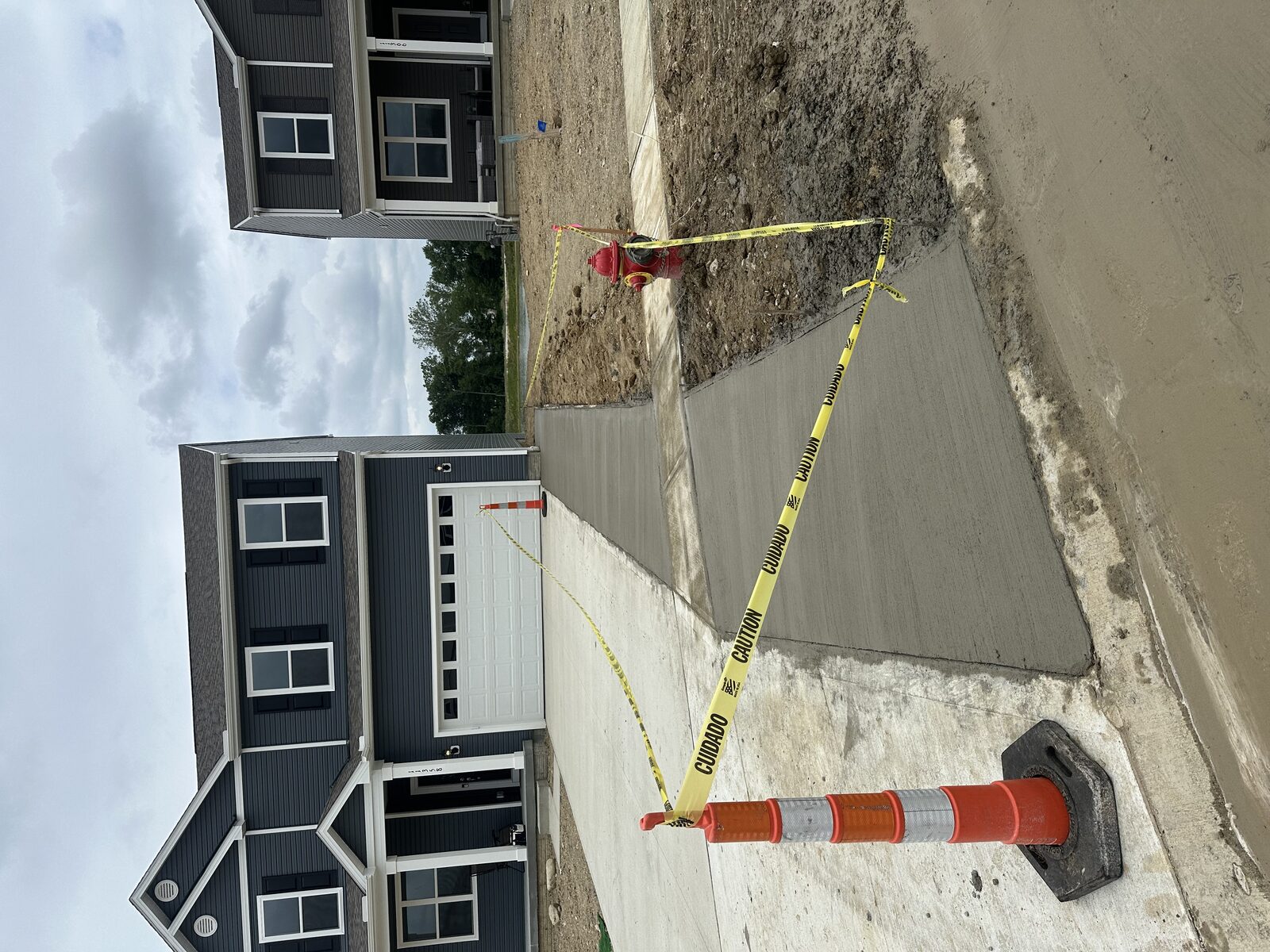
Water seeps into concrete, freezes, expands, and forces the concrete apart from the inside. Repeated freeze-thaw cycles through a Northeast Ohio winter turn small surface flaws into cracks, flaking, and settled sections. Damaged sections can often be repaired or replaced — request an estimate to have yours looked at.
What freeze-thaw does to concrete
Concrete is porous. Water works its way into small pores and hairline cracks, and when temperatures drop below freezing that water expands as it turns to ice. When it thaws, it leaves the gap a little bigger than before.
Around Cleveland, temperatures can cross freezing many times in a single winter. Each cycle widens cracks and loosens the surface layer.
Signs of freeze-thaw damage
Common signs include flaking or scaling on the surface, cracks that widen each spring, and sections that have settled or heaved out of alignment.
Walkways and steps often show it first because they are thin and fully exposed to the weather.
What can be done about it
Lightly damaged areas may only need attention to the surface, while cracked or settled sections usually need to be removed and replaced. The right approach depends on how far the damage has gone.
Concrete Masonry LLC replaces damaged walkways, steps, and driveway sections across Cuyahoga, Lorain, and Medina Counties. Request an estimate and the condition of your concrete will be reviewed in person.
Frequently asked questions
Can freeze-thaw damage be repaired, or does the concrete need to be replaced?
It depends on how deep the damage goes. Surface flaking and deeper structural cracking are handled differently — the condition is reviewed during your estimate.
When is the best time to replace concrete in Ohio?
Concrete work is generally scheduled in warmer months. Timing for your project is confirmed when you receive your estimate.