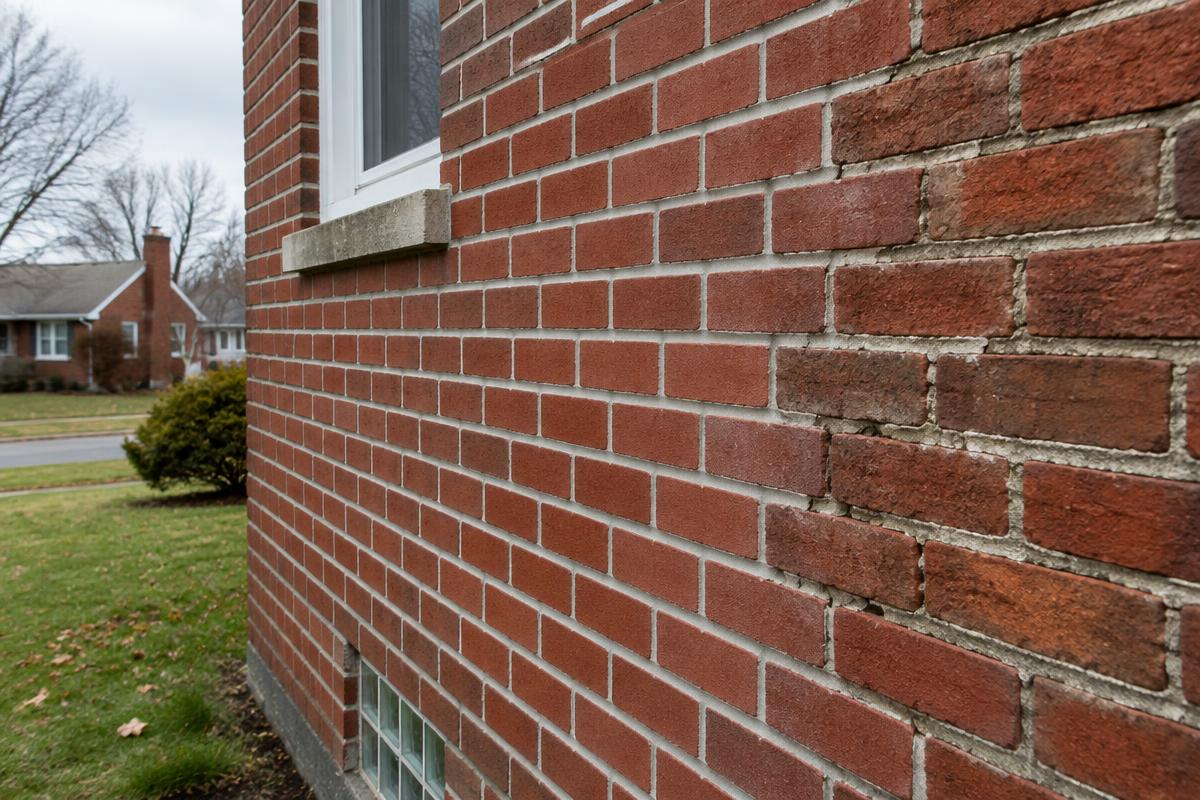
The clearest signs a brick home needs tuckpointing are crumbling or missing mortar, visible gaps or cracks in the joints, loose bricks, and water finding its way inside. Northeast Ohio's older brick homes are especially prone after years of freeze-thaw cycles. Tuckpointing removes the deteriorated mortar and replaces it with new mortar.
What tuckpointing is
Mortar is the material between your bricks, and it wears out long before the bricks do. Tuckpointing is the process of removing deteriorated mortar from the joints and packing in new mortar, restoring the wall's strength and keeping water out.
Signs to look for
Walk around your home and look closely at the mortar joints. Crumbling mortar you can scrape with a key, joints that have receded deep between the bricks, cracks running through the joints, and gaps where mortar has fallen out entirely all point to tuckpointing.
Inside, water stains on walls near chimneys or exterior walls can mean water is getting through failed joints.
Why it matters in Northeast Ohio
Cuyahoga, Lorain, and Medina Counties are full of older brick homes, and our winters are hard on mortar. Once joints open up, water gets in, freezes, and accelerates the damage — and can start loosening the bricks themselves.
Catching it early usually means a smaller repair. Request an estimate and the joints will be looked at in person.
Frequently asked questions
Is tuckpointing only for brick?
No. Deteriorated mortar joints in stone masonry can be repaired the same way.
Can you match my existing mortar?
Mortar matching is discussed during your estimate so the repair blends with your existing masonry as closely as practical.